
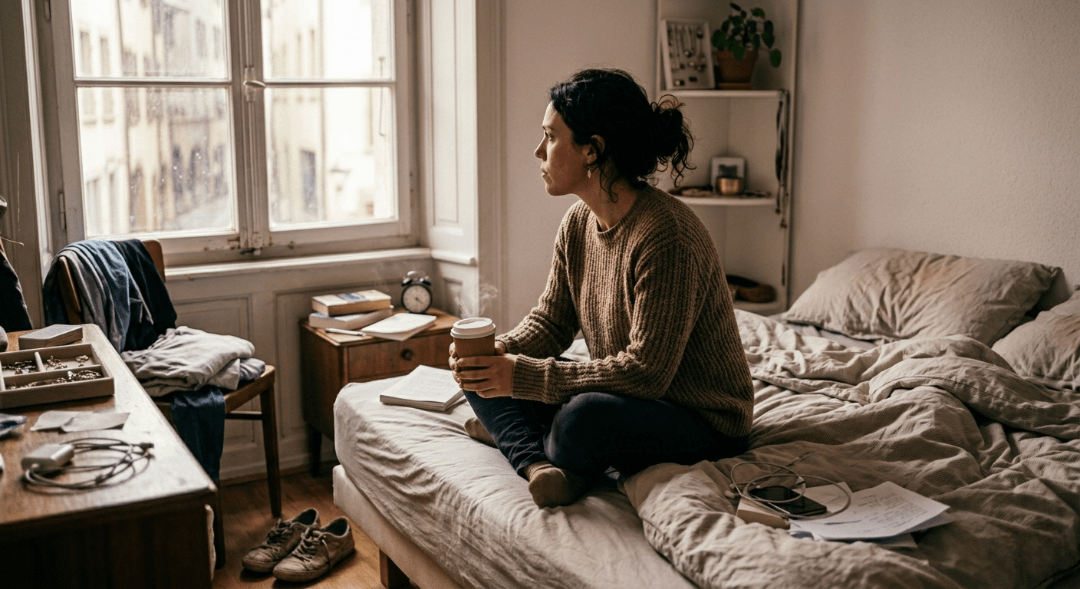
I don’t think I ever “failed” at morning meditation.
I think I just got tired of pretending it was working.
There’s a difference.
Because for a long time, I did what everyone says. Sit straight. Close eyes. Focus on breathing. Try to feel calm.
And most days… I just felt restless.
Not peaceful. Not clear. Just sitting there thinking about everything I had to do.
And then feeling slightly annoyed that this was supposed to help.
That’s the part nobody writes about.
Most advice still assumes your brain is calm in the morning
It’s not.
You wake up and your mind is already halfway into the day. Conversations, deadlines, random worries. Sometimes even dreams that didn’t fully leave.
And then you’re told to “just observe your breath.”
That gap is where people quit.
Even when I was in quieter places—like a few days around Annecy (I had this Annecy travel guide open half the time figuring things out)—my surroundings were calm, but my head wasn’t.
So now I don’t expect calm.
I just expect noise… and sit anyway.
That small shift helped more than any technique.
Long sessions sound good. Short ones actually happen
I used to aim for 15–20 minutes.
It felt like the “serious” way to do it.
But I almost never followed through.
Now it’s usually 5 minutes. Sometimes less.
Not because that’s ideal. Just because I’ll actually do it.
This clicked for me during a badly planned trip—wrong season, too much packed in (honestly, this best time to visit France guide would’ve fixed half my mistakes).
There was no way I was sitting for 20 minutes in that state.
But I could sit for 5.
And weirdly, that was enough to keep the habit alive.
Silence is not always helpful, and nobody says that clearly
People treat silent meditation like the “real” version.
But silence, especially in the morning, can feel loud.
Your thoughts don’t disappear. They just get more noticeable.
That’s why I stopped forcing it.
Some days I still sit in silence. Other days I just play a guided session.
Apps like Headspace or Calm are fine. Even the free stuff like UCLA’s meditation sessions works.
There’s no purity test here.
If it helps you sit there without getting up after 90 seconds, it’s doing its job.
I don’t always sit anymore
This one took me a while to accept.
I thought if I wasn’t sitting still, it didn’t count.
Then one morning in Lyon, after eating more than I should have (this Lyon food guide is partly responsible), I just couldn’t sit.
Felt restless. Heavy. Distracted.
So I went for a slow walk.
No music. No phone. Just walking and noticing things.
That was probably the most present I felt that week.
Now I don’t overthink the format.
Sitting, walking, standing near a window—it’s all fine.
Your mind wandering is the whole thing
This used to frustrate me.
I’d sit down and within seconds I was thinking about work, messages, random stuff.
And I thought that meant I was doing it wrong.
But that is the process.
You notice you’ve drifted. You come back. Then it happens again.
That repetition is basically the workout.
It’s not smooth. It’s not clean.
And honestly, it’s a bit boring sometimes.
The “perfect setup” is mostly an excuse
I’ve tried the aesthetic version. Clean space, perfect posture, quiet environment.
Didn’t last.
What lasted was doing it in normal, slightly messy situations.
Half-packed rooms. Background noise. Random hotel stays. Even during a rushed coastal trip where I kept jumping between places I found through this French Riviera hidden spots list.
None of it looked peaceful.
But those 5 minutes still worked.
So yeah, environment matters less than people think.
People aren’t trying to become calm anymore
This is probably the biggest shift I’ve noticed.
Nobody I know is meditating to become “deeply peaceful.”
They just don’t want to start the day already overwhelmed.
Or irritated.
Or distracted.
That’s it.
Morning meditation has quietly become practical.
Almost boring, actually.
But useful.
Missing days doesn’t break it anymore
I used to treat it like a streak.
Miss a day, feel bad. Miss two, stop completely.
Now I miss days all the time.
And then I just start again.
No reset. No overthinking.
That’s probably the only reason I still do it.
Because life doesn’t stay consistent long enough for perfect routines.
What actually works now (nothing fancy)
Honestly, it comes down to a few things:
- Keep it short so you don’t avoid it
- Use guidance if silence feels too much
- Don’t wait for the “right” setup
- Expect your mind to wander
- Start again without making it a big deal
That’s it.
It’s not impressive advice.
But it’s the only kind that seems to stick.
One thing I didn’t expect
Morning meditation doesn’t make me feel calm.
Not immediately.
What it does is slow things down just enough that I don’t rush straight into the day on autopilot.
Some days that difference is tiny.
Some days I don’t even notice it until later.
But when I skip it for a few days… I can tell.
And that’s usually what brings me back.
FAQs
How long should morning meditation be?
3–5 minutes is enough to start. If you can do that consistently, you’re doing it right.
Is guided meditation better than silent meditation?
For most people, yes. It makes it easier to stay focused, especially in the beginning.
Why does my mind keep wandering?
Because that’s what minds do. Just notice it and come back. That’s the practice.
Can I walk instead of sitting?
Yes. Walking meditation works well if sitting feels uncomfortable.