
A friend of mine from New York told me something recently that stuck. I’m not stressed,” he said. “I just don’t feel anything anymore.” That’s worse, if you ask me. This is the kind of burnout nobody posts about. No dramatic quitting story. No viral breakdown. Just… flat. And that’s exactly why this whole nervous system reset thing is blowing up right now. Not because people want a vacation.
Because they want to feel normal again.
This isn’t burnout like before
Earlier, burnout looked loud.
Now it’s weirdly functional.
People are still working, replying to emails, showing up on Zoom calls… but mentally, they’ve checked out. Everything feels slightly pointless, slightly exhausting, slightly off.
You wake up tired.
You sleep tired.
Weekends don’t fix anything.
That’s the part most articles skip. Burnout today isn’t a crash. It’s a constant low battery.
So when people hear “nervous system reset,” it sounds like a fix. Almost medical. Like you’re repairing damage, not just taking a break.
“Nervous system reset” sounds fancy, but it’s basic stuff
Honestly, if you remove the branding, it’s almost boring.
Walk more.
Sleep properly.
Eat without multitasking.
Stop checking your phone every 4 minutes.
That’s it.
But here’s the catch — doing this in your normal environment is ridiculously hard.
Your phone is right there. Work is right there. Stress is baked into your routine.
So people leave.
France wasn’t designed for this… but it accidentally works
Nobody in France is thinking, “Let’s help Americans regulate their nervous systems.”
They’re just… living.
And that’s the difference.
You land there and something feels off immediately — in a good way.
No one is rushing. Lunch takes time. Shops close early like it’s not a big deal. People sit at cafés doing absolutely nothing and somehow don’t feel guilty about it.
Try that on your first day. You’ll feel restless in 10 minutes.
Then slowly, it starts to shift.
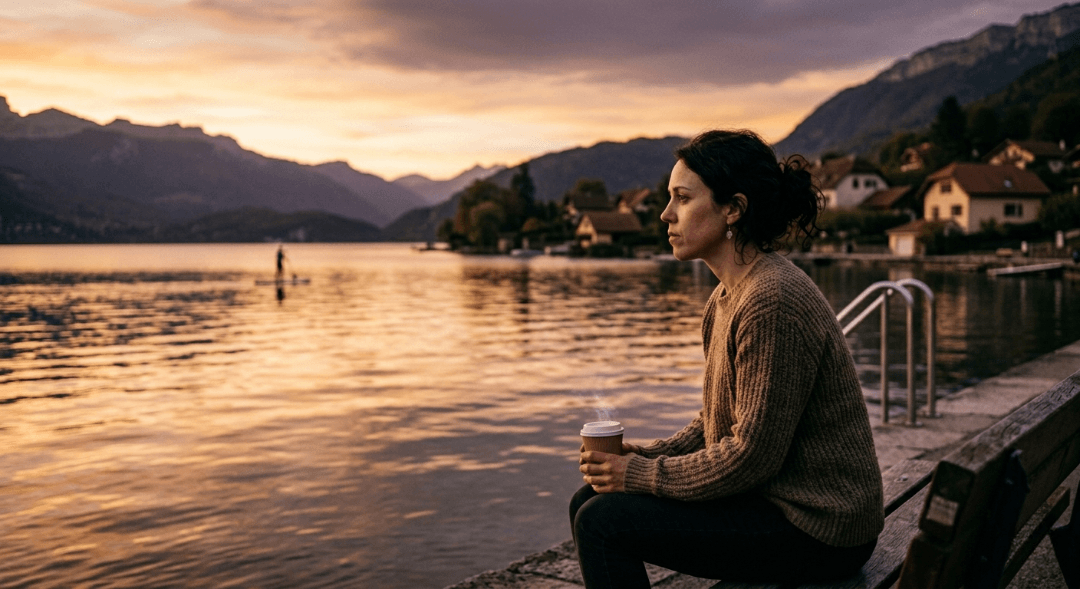
I remember sitting by the lake in Annecy — this ridiculously calm place I wrote about in my Annecy travel guide — and thinking, “Why does doing nothing feel so uncomfortable?”
That discomfort? That’s the reset starting.
The hardest part is not slowing down — it’s allowing it
People think they’ll go to France and instantly relax.
No.
First, you get irritated.
Why is lunch taking so long?.
Why is service slow?
Then you realize… nothing is actually wrong. You’re just used to speed.
I had this moment in Lyon once. I was following my own recommendations from this Lyon food guide, sitting in a small bouchon, and I caught myself checking my phone out of habit.
There was nothing urgent. No reason.
Just habit.
That’s when it hits you — the stress isn’t always external anymore. It’s internalized.
Nature helps, but not in the dramatic way Instagram sells it
You don’t need a silent retreat in the mountains.
Most people won’t last two days there anyway.
What actually works is softer.
Like cycling through the Loire Valley — not rushing, just moving from one castle to another, stopping for coffee, getting slightly lost. I wrote more about it in this Loire Valley castles guide.
Or finding a quiet coastal town instead of the packed Riviera hotspots. The kind I mentioned in this French Riviera hidden spots guide.
You’re not disconnecting from life. You’re just removing the noise.
Big difference.
Most people mess this up by choosing the worst time to go
This part is almost funny.
Someone plans a “healing” trip… and books it in August.
Peak crowds. Heat. Chaos.
Now you’re stressed in a prettier location.
Timing matters more than destination, honestly.
Go in May. Or September.
I’ve explained this properly in my best time to visit France breakdown, but the short version — fewer people = more space in your head.
Simple.
Let’s be honest — this won’t magically fix your life
Two weeks in France won’t cure burnout.
You’ll feel better, yes.
You’ll sleep deeper. Walk more. Maybe even forget your phone exists for a few hours.
Then you go back home.
So what’s the point?
The point is perspective.
Once you experience a slower way of living — even briefly — you can’t pretend you don’t know what’s missing anymore.
And that awareness is uncomfortable… but useful.
You don’t actually need France (but it makes it easier)
You could try all of this at home.
Wake up earlier. Walk without your phone. Eat slowly.
But environment matters more than motivation.
When everything around you is fast, loud, and urgent… slowing down feels unnatural.
France just flips that.
Even the way they promote travel feels different. If you look at the official France tourism site, it’s not just “visit places.” It’s “experience a way of living.”
That’s what people are really going for.
Not the Eiffel Tower. Not the wine.
The feeling.
The part nobody selling “nervous system resets” will say
You can’t outsource this.
Not to a country, Not to a retreat, Not to a perfectly planned itinerary.
At some point, you have to change how you live — not just where you go.
But…
Sometimes you need to leave your life for a bit to realize what’s wrong with it.
And that’s exactly what these trips are doing.
FAQs
What is a nervous system reset?
It’s basically giving your body a break from constant stress. Better sleep, slower routines, less screen time — simple things that calm your system.
Why are people traveling for this?
Because it’s easier to change habits in a new environment than in your regular life where stress is constant.
Is France actually good for burnout?
Yes, mainly because of lifestyle. Slower pace, more walking, less urgency — it naturally pushes you to relax.
How long does it take to feel better?
A few days can make a difference. But real change happens only if you carry some habits back home.
One thought before you go
Most people think they need a break from work.
They don’t.
They need a break from the way they’ve learned to live.
And once you see that clearly… you can’t unsee it.