
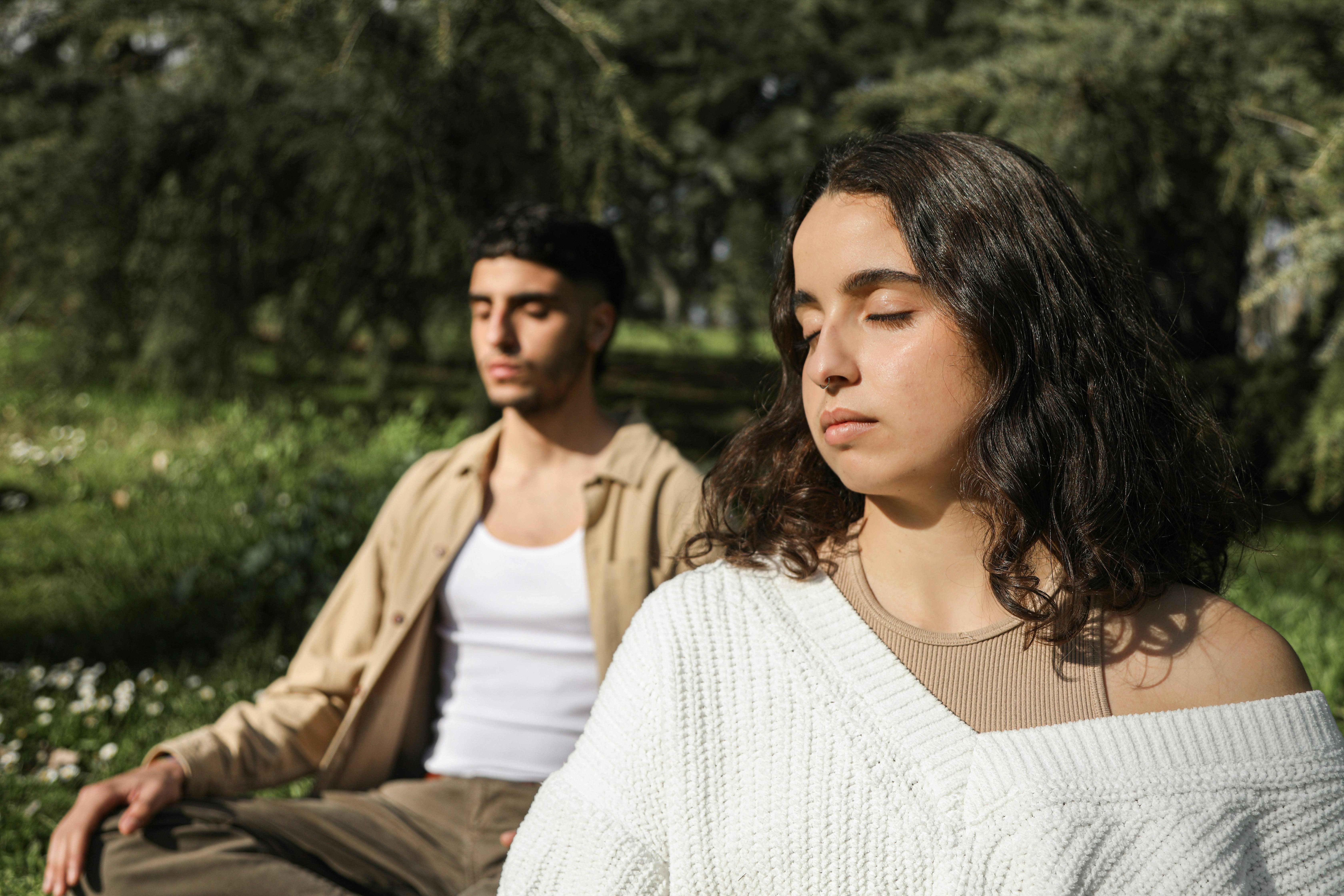
Traditions that teach sitting practice almost always teach a walking counterpart. It is not a rest period between sittings but a distinct method with different properties.
The anchor is coarser and more reliable
Walking supplies continuous, unmistakable physical sensation through the feet and legs, which is far easier to locate than the breath.
That reliability makes the practice accessible when attention is scattered or when a person is too agitated to sit.
The same coarseness limits it. Fine changes in attention that become visible in stillness are harder to detect against a stronger signal.
Drowsiness stops being the problem
Sitting practice runs into sleepiness, particularly during long sessions, after meals and early in the morning.
Movement largely removes this, which is why traditions alternate the two rather than choosing one, and why walking periods are placed after meals in retreat schedules.
Restlessness replaces it as the characteristic difficulty, and the practice is structured to work with that instead. The urge to walk faster, or to stop and do something else, is the material a walking period actually presents.
Pace functions as an instruction
Formal walking practice is often conducted very slowly, sometimes with each phase of a step noted separately.
Slowing the movement stretches the sensations across more time, making detail available that a normal pace passes over.
Other traditions use ordinary walking pace over a longer distance, which trades that detail for something that transfers directly into daily activity.
The route is deliberately uninteresting
Formal practice typically uses a short fixed path walked back and forth, or a defined loop, rather than a route with anything to look at.
A repetitive path removes navigation and scenery, both of which would otherwise occupy the attention the practice is training.
This is the practical difference between walking practice and a walk, which is why an unfamiliar or attractive route makes a poor setting for it.
It bridges into the rest of the day
Because it is done upright, moving and with eyes open, walking practice resembles ordinary activity far more closely than sitting does.
Traditions use this deliberately, treating it as the link between formal periods and the ordinary movement that fills the rest of the day.
Practitioners who find sitting produces little that persists afterwards often report the opposite from walking, since the conditions it trains under are the conditions they are usually in.